


Kitesurfing in Vietnam
Vietnam is one of the few places in the world where the season lasts several months in a row, the wind is predictable, the water is warm year-round and the infrastructure has grown up around the needs of kiters. Every winter the northeast monsoon picks up over the long, narrow coastline and delivers a steady 15–25 knots from November through April. Average water temperature is 24–26 °C — no wetsuit required.
But people don't come here just for the wind. Vietnam is a vibrant, authentic country with a rhythm of its own that fits a kite trip well. Fishing villages, street food, roads cutting through mountains and rice fields, friendly people — all at prices that make a month here feel cheaper than two weeks in Europe. Many arrive for a couple of weeks of riding and end up leaving a month later.
There are two main kite regions: Mui Ne in the south and Phan Rang, 2.5 hours to the north. Different conditions, different infrastructure — together they cover just about any kind of trip.
-
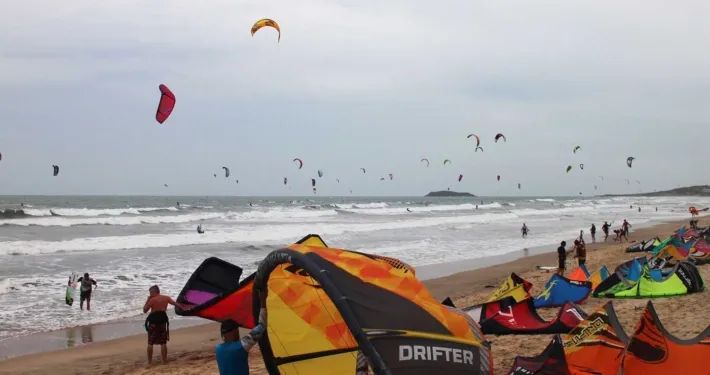
Mui Ne
Vietnam's main kite region with mature infrastructure. Good waves for wave riding, and you can ride straight from the hotel.
Mui Ne → -
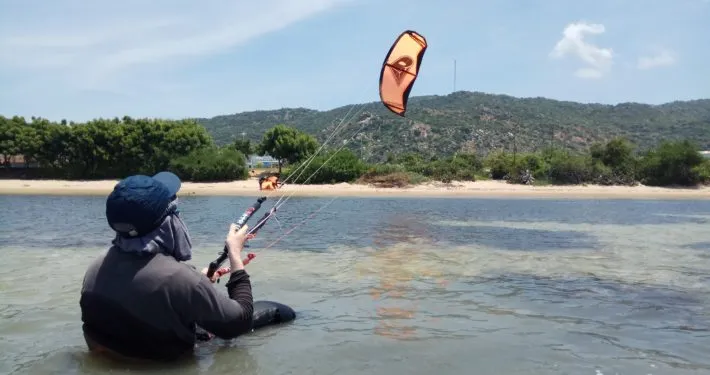
Phan Rang
A shallow lagoon with strong wind — perfect for getting up on the board. Downsides: no infrastructure and you can't ride at low tide.
Phan Rang →


Season
The main season runs from mid-November through the end of April. The peak is January, February and March: the wind blows almost without breaks, typical kite sizes are 7–9 m². November and December are good months with slightly less wind density. In summer the wind shifts direction and the main spots become unrideable; some advanced riders move on to the northern regions.
A detailed month-by-month breakdown, statistics and tips for choosing when to come — in the season guide.